Geneva Peace Forum 2026: Meaningful Inclusion in Peace Negotiations
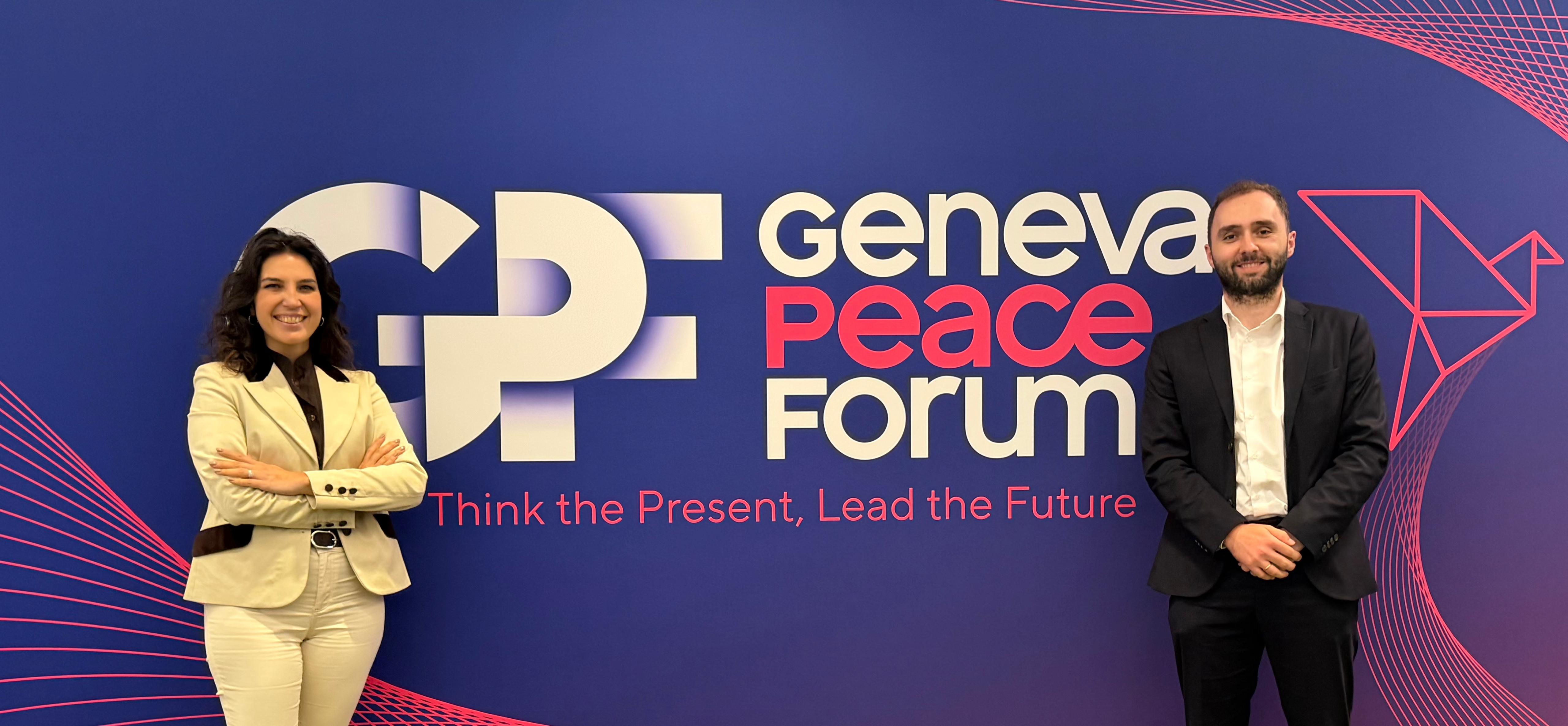
During Geneva Peace Forum 2026, the Negotiation Council Geneva organized three events exploring how negotiations can contribute to more inclusive and sustainable peace. In collaboration with Geneva Call, the OSCE, the Geneva Graduate Institute’s Gender Centre and foraus – Swiss Forum on Foreign Policy, we brought together practitioners, experts, and students to examine humanitarian negotiations on the frontline, women’s meaningful participation in peace processes, and the role of young people in negotiations.
Across all three engagements, one message stood out. Inclusion is not simply about being present at the negotiating table. It is about having the opportunity and the ability to influence the decisions being made.
Humanitarian negotiations on the frontline
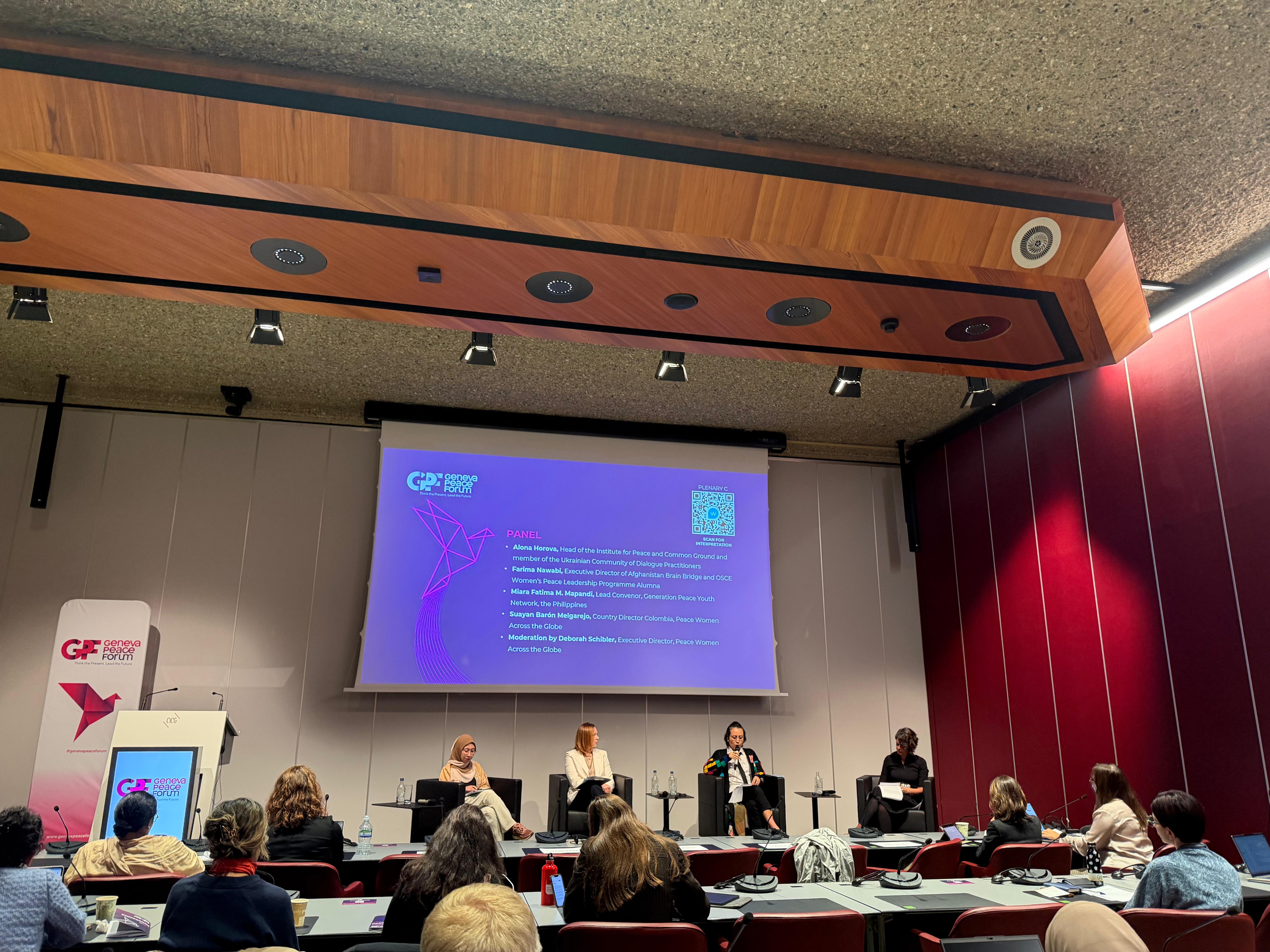
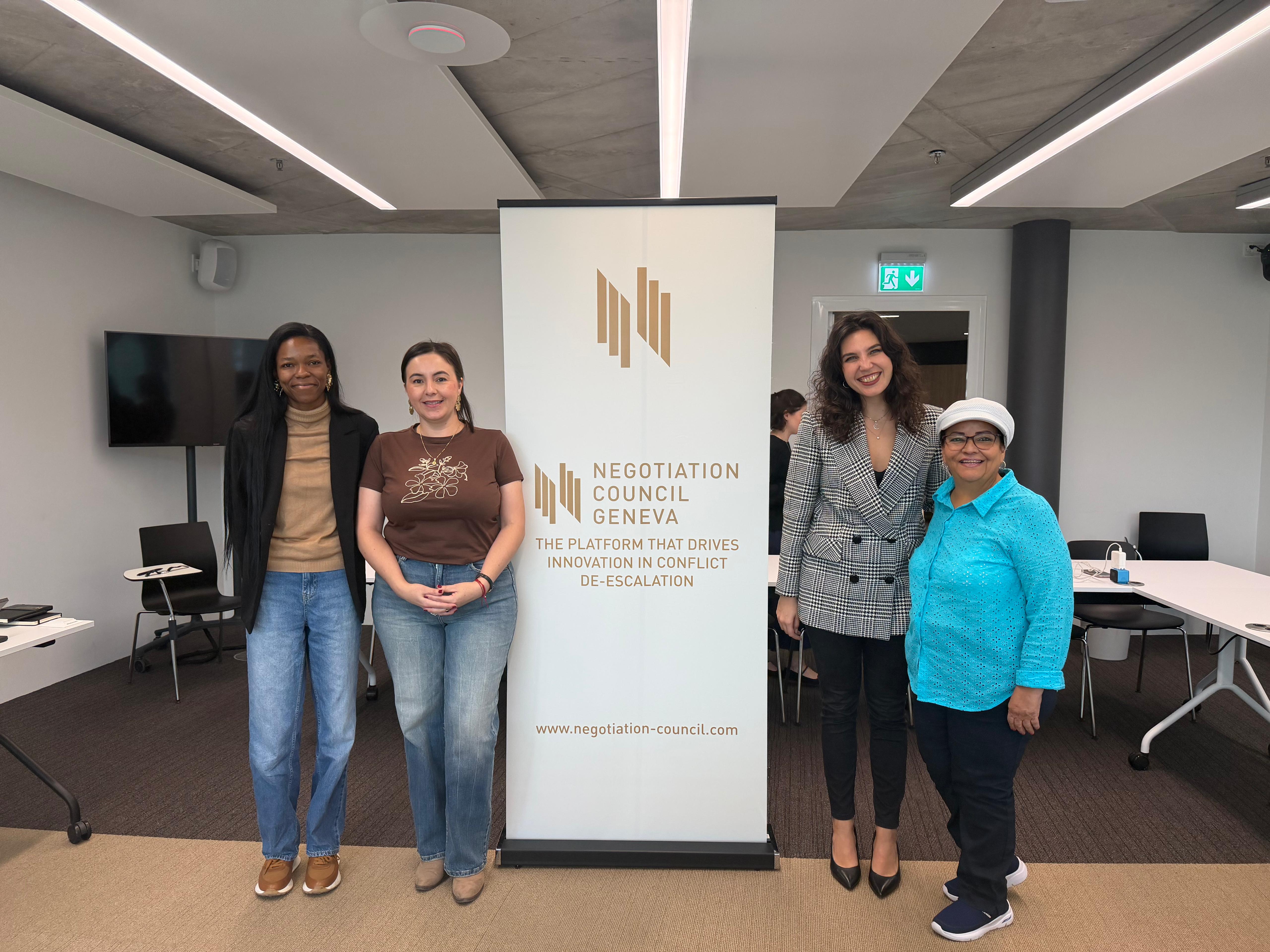
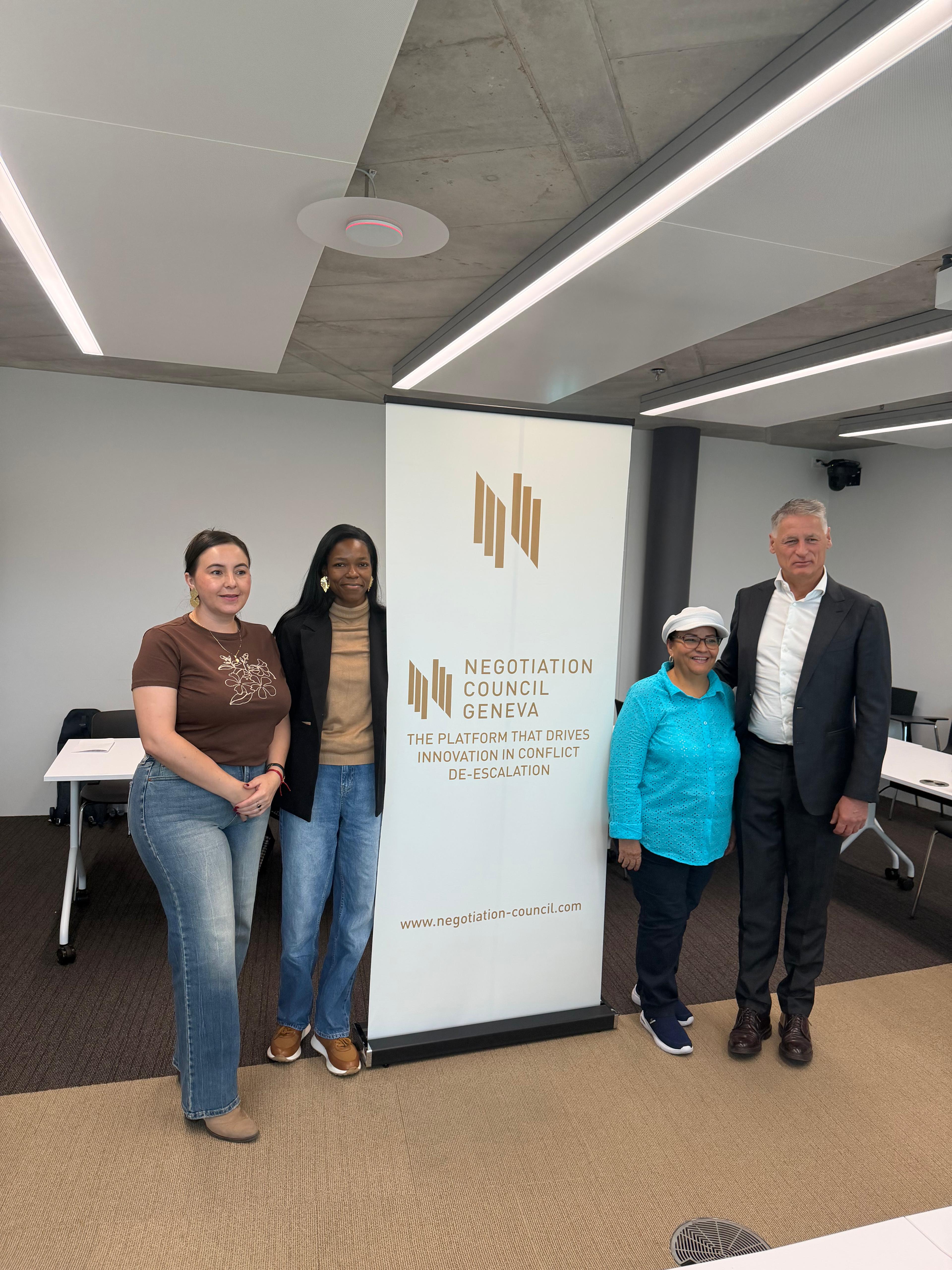
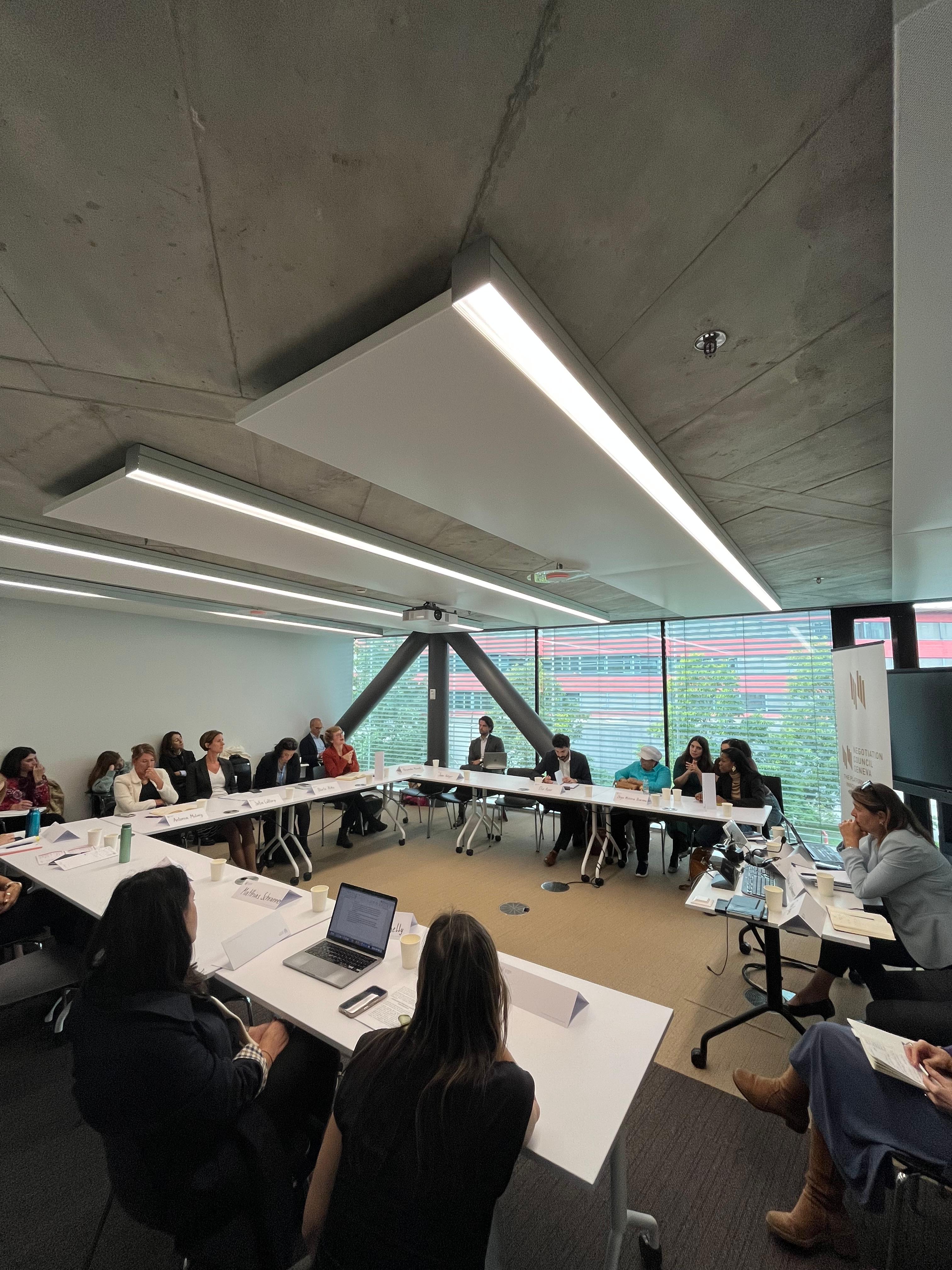
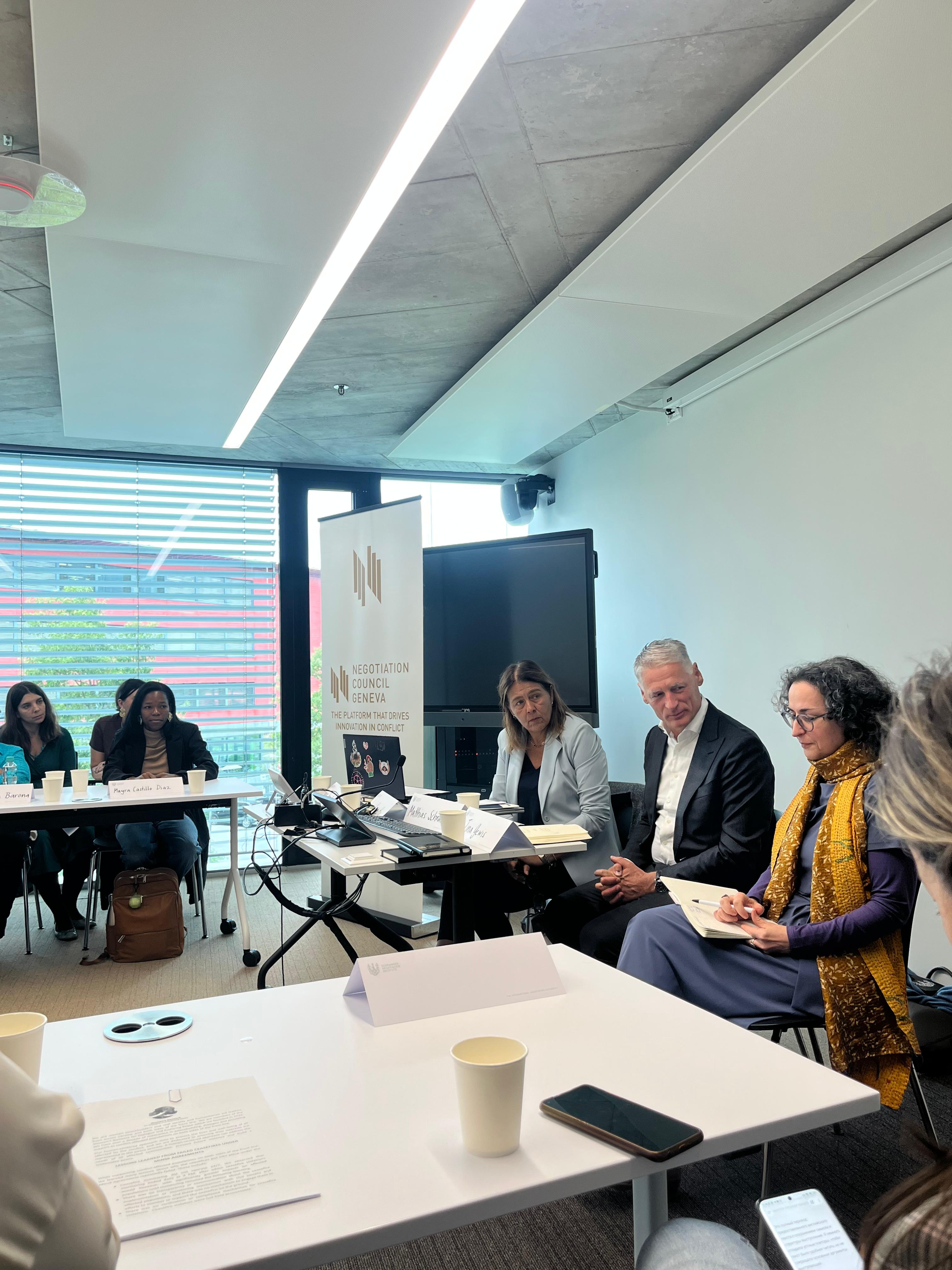
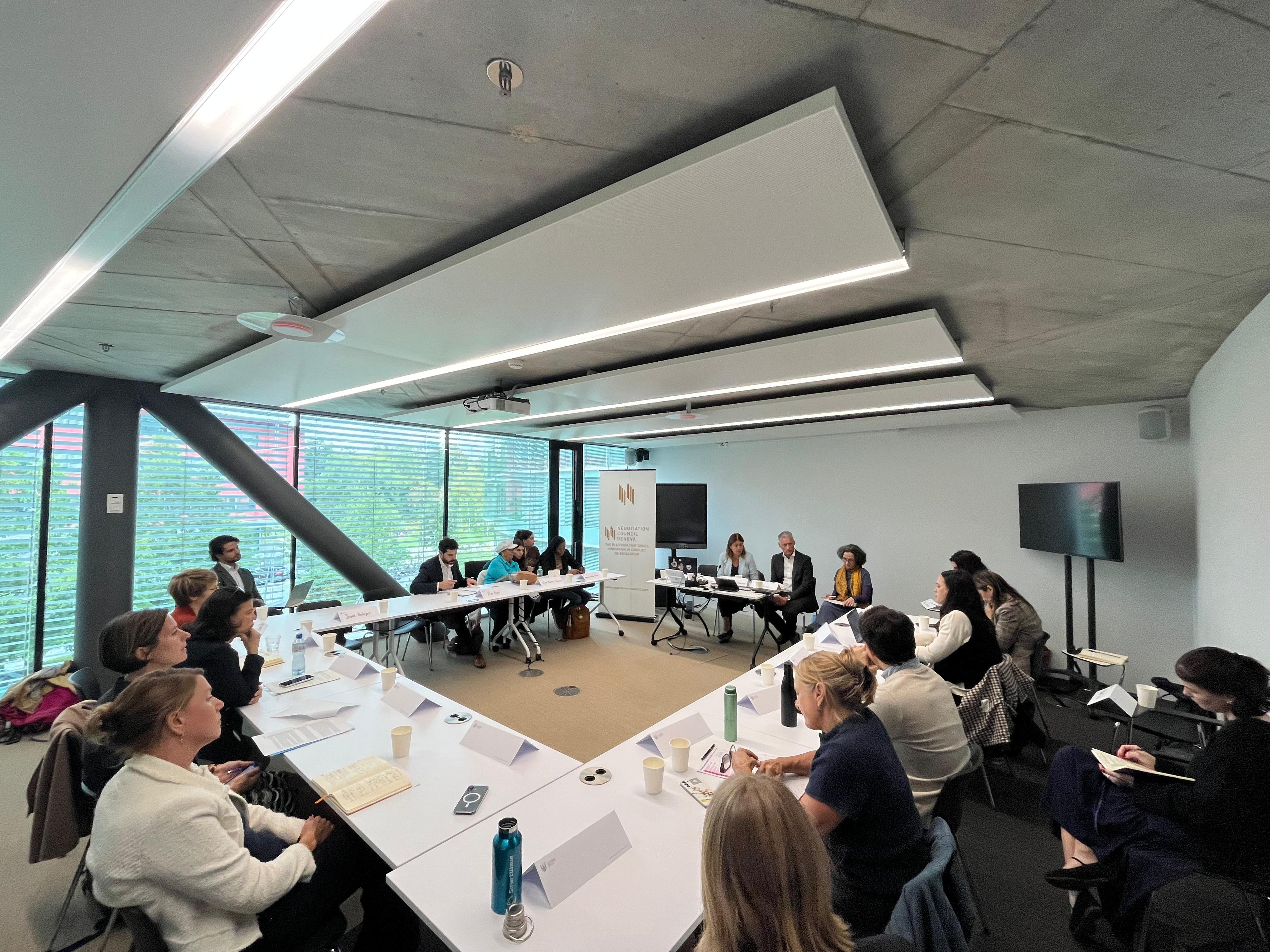
Together with Geneva Call and the OSCE, we organized “When the Negotiating Table Is on the Frontline: Women Negotiating for Humanity.” The discussion explored the realities of humanitarian negotiations in conflict settings, where the actors involved, the risks they face, and the dynamics of engagement are constantly changing.
Women activists from Cauca, Colombia, shared perspectives grounded in their experiences of conflict and frontline engagement. Their contributions highlighted the importance of recognizing the knowledge, agency and negotiating roles of women working in contexts where humanitarian needs are urgent and access can be difficult to secure.
The event also underscored the importance of understanding negotiations beyond formal diplomatic settings. In frontline contexts, negotiation can be essential to engaging armed actors, addressing humanitarian concerns and navigating complex relationships under pressure.
Women’s meaningful participation in peace negotiations
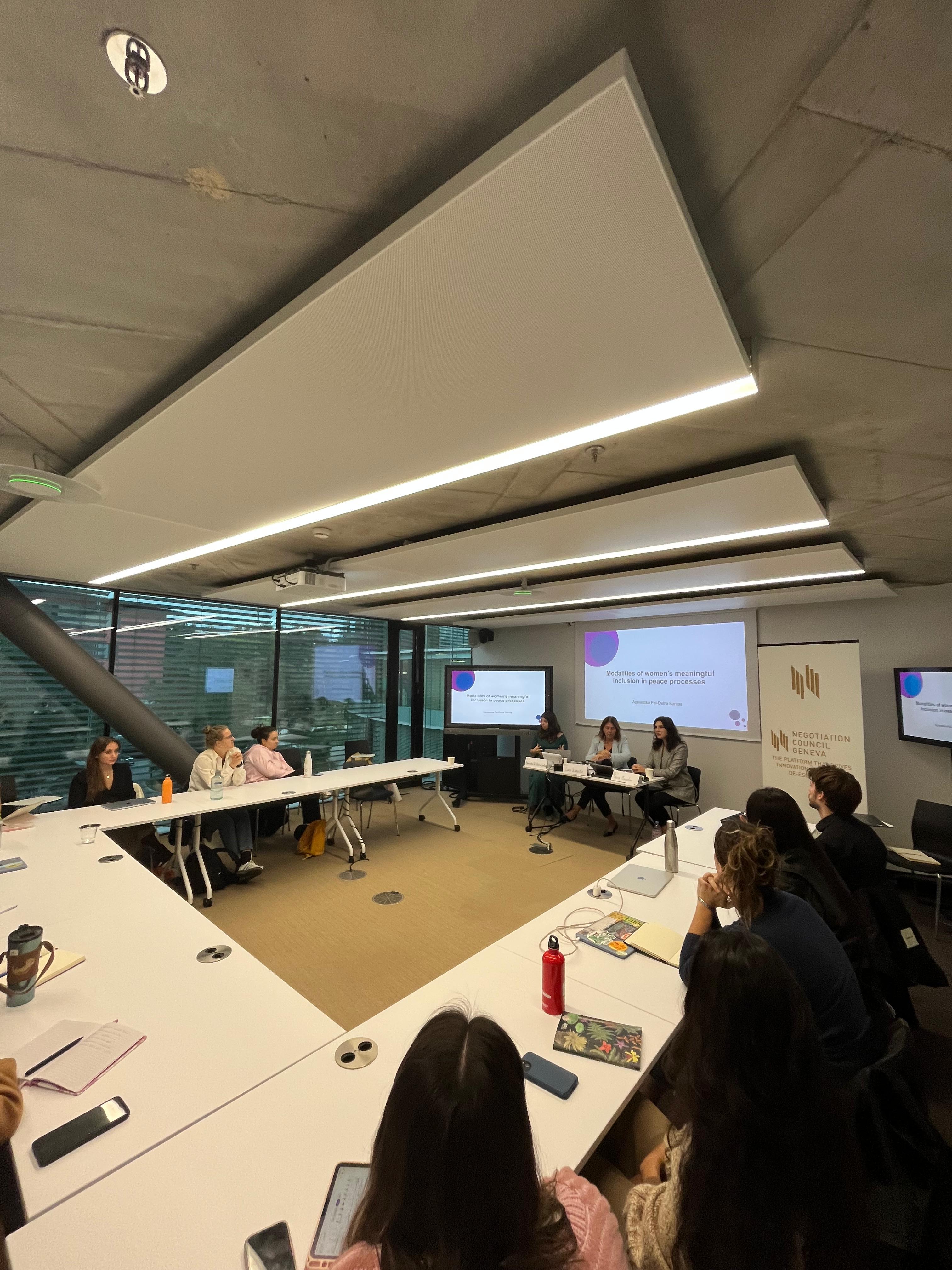
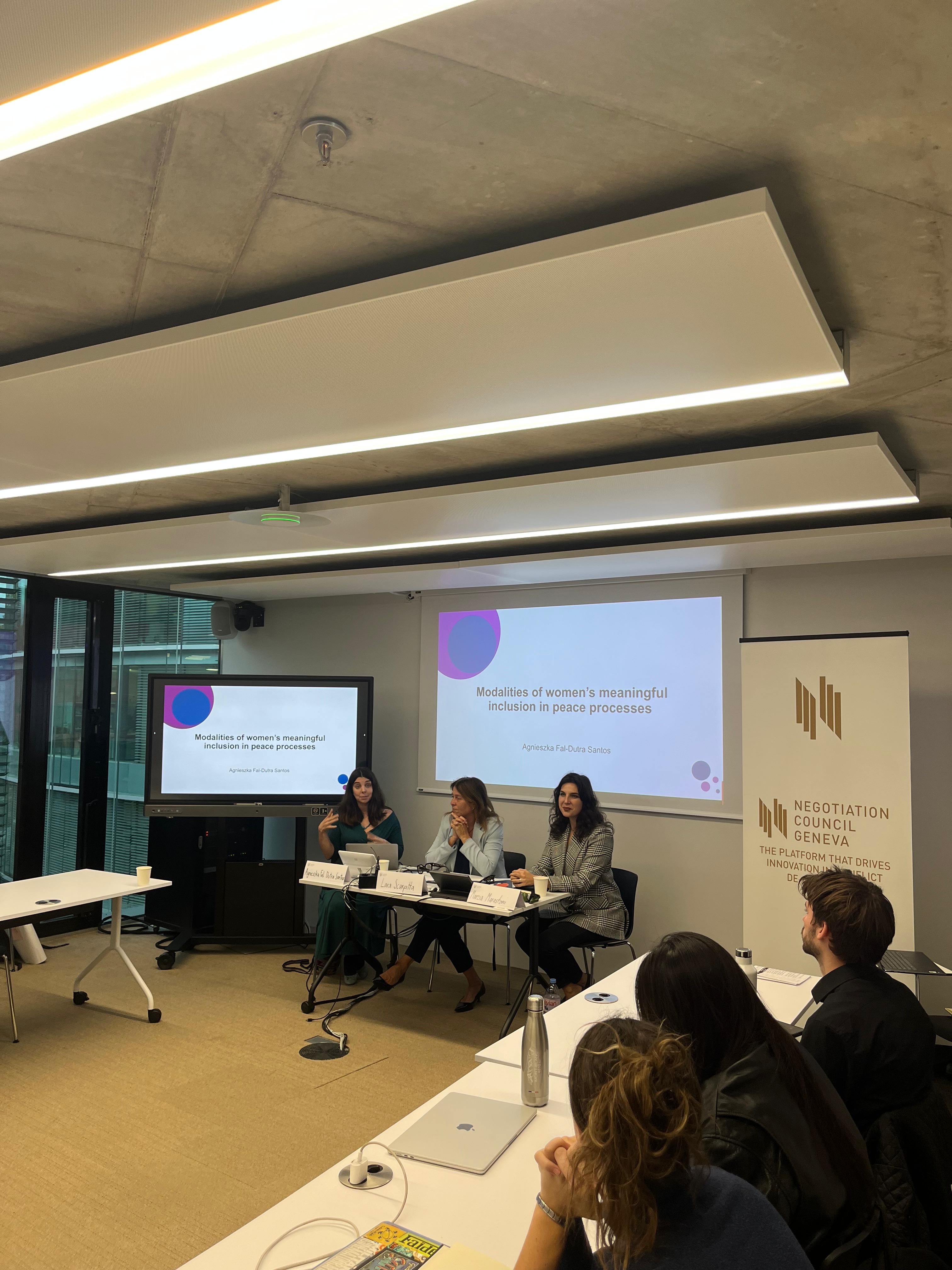
In a student workshop at the Geneva Graduate Institute, organized with the OSCE and the Institute’s Gender Centre, participants explored women’s participation, power, and leadership in peace and diplomacy. Joined by Dr. Lara Scarpitta and Agnieszka Fal Dutra Santos, participants examined what meaningful inclusion requires and why representation alone does not guarantee influence.
The discussion focused on the distinction between having a seat at the table and being able to shape the agenda, contribute to decisions and influence outcomes. Meaningful participation depends on the conditions that enable people to exercise influence, including access to information, decision-making authority and the ability to have their priorities taken seriously.
Women’s participation is therefore not a box to tick. It is a question of power, legitimacy and whose interests are reflected in decisions that shape the future of communities affected by conflict.
Young people’s participation in negotiations
Together with foraus – Swiss Forum on Foreign Policy, the Negotiation Council Geneva also held a workshop with students on young people’s participation in negotiations. The session held at the University of Geneva created space to exchange ideas about negotiation, leadership, and the role young people can play in shaping political and diplomatic processes.
As with women’s participation, the central question was not only whether young people are included, but whether they have a meaningful opportunity to contribute to decisions. This requires looking beyond formal representation to the structures, relationships, and power dynamics that determine whose voices are heard and whose perspectives influence outcomes.
Engaging young people in negotiations is part of a broader effort to ensure that those impacted by decisions have a meaningful role in shaping them.
From representation to influence
Taken together, the three events reinforced a shared conviction. Namely that lasting peace requires the meaningful participation of the people most affected by conflict. Whether negotiations take place on the frontline, in formal peace processes or in diplomatic settings, inclusion must go beyond presence to enable genuine influence over decisions and outcomes.
The Negotiation Council Geneva thanks Geneva Call, the OSCE, the Geneva Graduate Institute’s Gender Centre and foraus for their collaboration, as well as all speakers, participants, and colleagues who contributed to these exchanges. We are particularly grateful to the women activists from Cauca, Colombia, for sharing their experiences and insights.
There is still much work to do to make peace processes more inclusive. These conversations reaffirm why it matters. Who gets to shape the peace we are trying to build is as important as the negotiations themselves.